
Over a dozen federal departments and agencies plan to invest more than $18 million to encourage their employees to increase their office attendance.
Federal employees were assigned the goal of working in the office four days a week starting in July, up from the previous requirement of three days. Executives returned to the office full-time in May.
In response to an order paper inquiry from NDP MP Heather McPherson, 13 federal entities indicated they intend to collectively spend $18,720,150 to modify or obtain office space to support this increase in in-person work.
Innovation, Science and Economic Development Canada reported a planned expenditure of nearly $5.7 million, while Fisheries and Oceans Canada estimated spending $4.2 million.
The Canada Border Services Agency projected its expenses at $3.9 million, and Correctional Service Canada announced plans to allocate $1.37 million.
Some federal agencies stated they do not anticipate any costs related to the transition back to the office or that such costs are still under review. Several directed inquiries to Public Services and Procurement Canada, which mentioned it is still assessing the financial implications.
-
Lack of space keeping 10% of federal public servants from more office time
-
More than 90% of public servant early retirement applications will be approved
On Wednesday, McPherson expressed to The Canadian Press that the government has evidently failed to conduct adequate research to substantiate its assertion that it is cost-effective for employees to return to the office.
She suggested that the overall cost may be significantly higher once data from additional departments and agencies is collected.
“They lack the necessary information to make informed decisions that safeguard the rights of workers in this nation,” she stated.
“Yet they are proceeding with choices that negatively impact people, families, and individual workers across the country.”
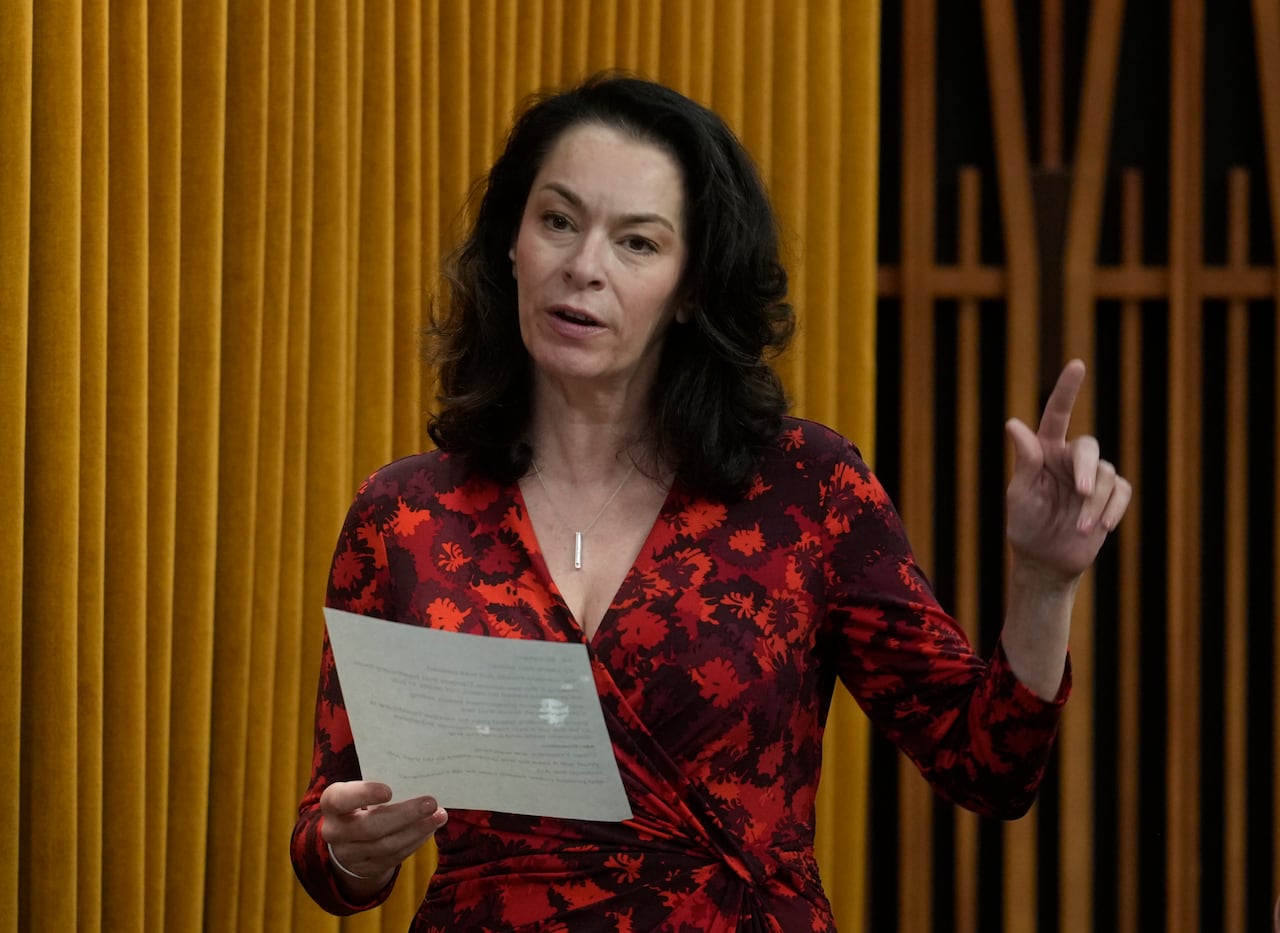
NDP MP for Edmonton Strathcona Heather McPherson rises during question period in April. (Adrian Wyld/The Canadian Press)
When questioned by Radio-Canada, Treasury Board President Shafqat Ali refrained from commenting on the costs involved in increasing office attendance to four days a week, stating that the situation has been going “OK.”
In May, Treasury Board Secretary Bill Matthews informed a House of Commons committee that the government’s decision regarding public servants’ office return was a “philosophical choice.”
“If you look beyond the federal government — to industry, municipalities, and provinces — you will notice the trend,” he remarked.
“If you’re searching for a study that demonstrates this is a superior approach, I do not possess one. I would characterize this as an employer’s philosophical choice based on the belief that teamwork is more effective.”
Unions representing federal employees have consistently argued that the expenses incurred by taxpayers, the environment, and the work-life balance of their members do not justify what they perceive as minimal productivity improvements, if any.

The CBC’s Sannah Choi spoke to commuters in Ottawa who say they’ve noticed an increase in the number people on trains and buses as the summer ends.
Responses to another order paper inquiry initiated by McPherson indicated that numerous federal buildings have reported pest infestations, including mice, rats, bats, and bedbugs since 2020.
McPherson asserted that the government is failing to uphold the rights of workers by sending them back into “unsafe or unproductive” environments.
