
Jordan Bonaparte was taken aback when he visited the QEII Health Sciences Centre’s emergency department in Halifax with a relative on Saturday and noticed mice scurrying through the corridors.
A paramedic quickly reassured him about the situation.
“One paramedic mentioned that there were as many mice as patients, if not more,” Bonaparte recalled. “My experience in the emergency room at the Infirmary certainly highlighted that.”
After observing the mice for nearly six hours, Bonaparte’s family member was finally taken to a room. Almost immediately, he recounted, a mouse emerged and began to climb onto the bed with the patient.
“I’m convinced if I hadn’t gotten up and stomped my feet, that mouse would have gone right onto my bed in search of the food being served to her,” he stated.
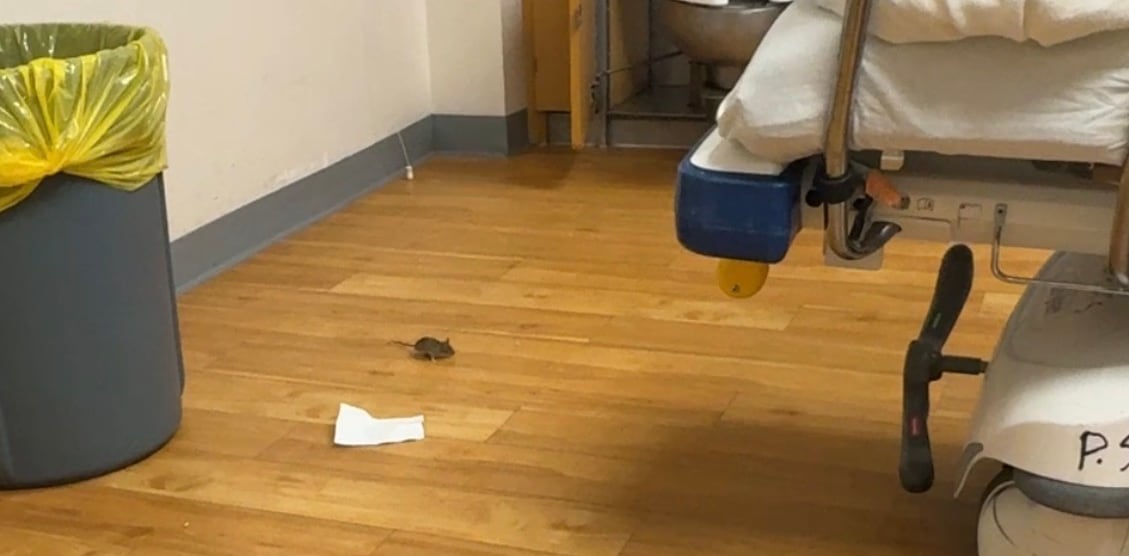
Jordan Bonaparte noted that this mouse was running around a relative’s room in the emergency department at the Halifax Infirmary. He mentioned the mouse was so bold that it tried to climb into the bed for food. (Submitted by Jordan Bonaparte)
Nova Scotia Health recognizes that the situation at the QEII complex exceeds what is typically seen in a port city, where rodents are often present.
Documents acquired by CBC News indicate that the expenditures for pest control at both the QEII and Dartmouth General Hospital have surged over the past five years.
The budget for the QEII, which encompasses the Halifax Infirmary, Victoria General, and Rehabilitation sites, increased from $35,942 to $323,075, marking a staggering rise of 798 percent.
During the same period, Dartmouth General experienced the highest percentage increase in the province, escalating from $9,545 to $120,012 last year—a jump of 1,157 percent.
Chris Smith, senior director of facilities operations at Nova Scotia Health, stated, “The number of sightings has grown tremendously over the past few years.”
“While it’s easy to attribute this to being in a port city, it doesn’t alter our stance that they have no place in healthcare environments. We must do everything possible to keep them out and ensure these areas remain clean, sanitary, and safe.”

According to Nova Scotia Health, ongoing construction at the QEII Health Sciences Centre has exacerbated the rodent issue. (Build Nova Scotia)
Both facilities are enveloped by significant construction endeavors. Smith indicated that he anticipated an increase in pest activity once the ground was broken for the QEII expansion project.
“We expected an uptick, but the extent of the increase has surprised us,” he added.
Over the past five years, the health authority has reported capturing 1,435 mice or other rodents within the QEII buildings, which span 2.9 million square feet. An additional 321 rodents have been caught at Dartmouth General Hospital.
“We’re dealing with aging infrastructure, and it’s a complicated setting. Each day, hundreds, if not thousands, of individuals enter and exit these buildings for medical appointments, supplies, and equipment,” Smith explained.
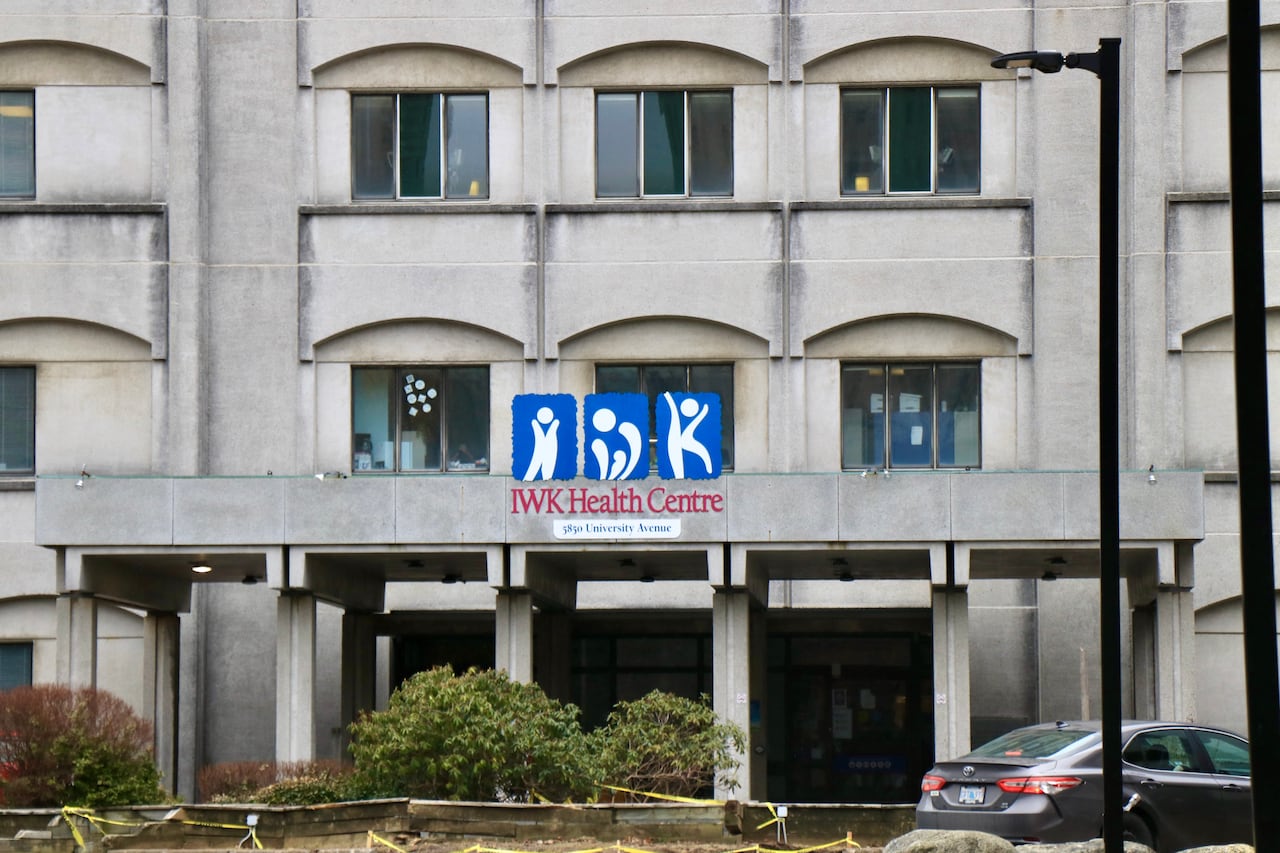
The IWK Health Centre reported needing to carry out extensive measures to address a pigeon infestation. (Paul Palmeter/CBC)
In contrast, the IWK Health Centre stated that mice are not its primary concern, despite being adjacent to the QEII.
Last year, the women and children’s hospital had to allocate $180,000 to manage “unusual bird activity,” primarily related to pigeons.
The IWK opted not to provide an interview but issued a statement instead.
“This involved extensive cleanup of bird droppings and nesting sites, along with the installation of netting and spikes to prevent birds in the future,” the statement detailed.
The IWK anticipates ongoing monitoring of the situation, implying that some expenses will continue.
While the IWK’s cleanup has largely been completed, Nova Scotia Health is still grappling with its rodent issue.
Smith remarked, “This is a problem that has developed over years and will likely take several more years to completely address.”
Smith mentioned that his department has implemented a three-part strategy. They have engaged professional exterminators who visit daily, are encouraging staff to report any sightings to identify areas for traps, and have initiated external inspections of the buildings to find small openings.
“Some of these efforts led to 100 or 200 work orders for all the little gaps and crevices that needed sealing,” he explained.
“If any remain open, we are actively addressing them. It’s not a quick fix.”
Smith urges staff and patients to remain vigilant and report any sightings.
Days after his hospital visit, Bonaparte is still unsettled by the experience and believes people should demand better conditions in their healthcare facilities.
He shared a video of his experience on his podcast pages, The Canadian Gothic, where many commenters claimed such conditions were commonplace.
“If your standards for healthcare are so low that you’re okay with mice running around the emergency room where individuals are fighting for their lives, I think that’s an unreasonably low expectation,” he concluded.
MORE TOP STORIES
-
Survivor of intimate partner violence a ‘profile in courage,’ says federal justice minister
-
Halifax mayor welcomes $100M federal fund for AI-powered housing approvals
-
Halifax’s Brian Ahern, who produced albums by Anne Murray and Johnny Cash, dead at 81
-
‘Poignant’ Halifax Remembrance Day ceremony comes soon after Wainwright tragedy
-
Why the first U-boat to surrender in North America landed in this N.S. town
Tag: rewrite-pending
