
On Saturday, a judge in Paraguay mandated that former President Santiago Peña be placed in pretrial detention at a military facility as prosecutors examine his connections to the digital lender Ueno, which has failed, leaving millions of customers unable to access their accounts.
Judge Humberto Otazú ruled that Peña, who faces charges of breach of trust and mismanagement for personal benefit, should be held at the facility, emphasizing that his detention was essential to guarantee that he remains in the country throughout the legal proceedings.
This detention comes just a day after Peña’s ousting from office and exacerbates a political and financial turmoil that has sparked protests in Asunción, implicated senior officials, and prompted regulators to mitigate risks to the broader financial system.
Peña’s lawyer, Ricardo Preda, informed the press that Peña is pleading not guilty to the allegations.
“We will cooperate with the investigation, and I am confident that upon its conclusion, the result will be a dismissal,” Preda stated.
Otazú also ordered former central bank governor Carlos Carvallo to be held in pretrial detention at a holding center following charges against him for breach of trust, falsifying public documents, and mismanagement for personal gain.
Carvallo has not yet responded to requests for comments.
Allegations of Conflict of Interest
Peña is accused of leveraging his political power to direct hundreds of millions of dollars in public funds to Ueno, all while regulators ignored risky insider lending practices.
According to prosecutors, this relationship resulted in a conflict of interest as Peña promoted, enabled, or influenced decisions that favored the bank.
The seeds of this crisis were sown in June, when central bank inspectors discovered a trend of risky loans to insiders, as reported by ABC Color, a prominent Paraguayan publication.
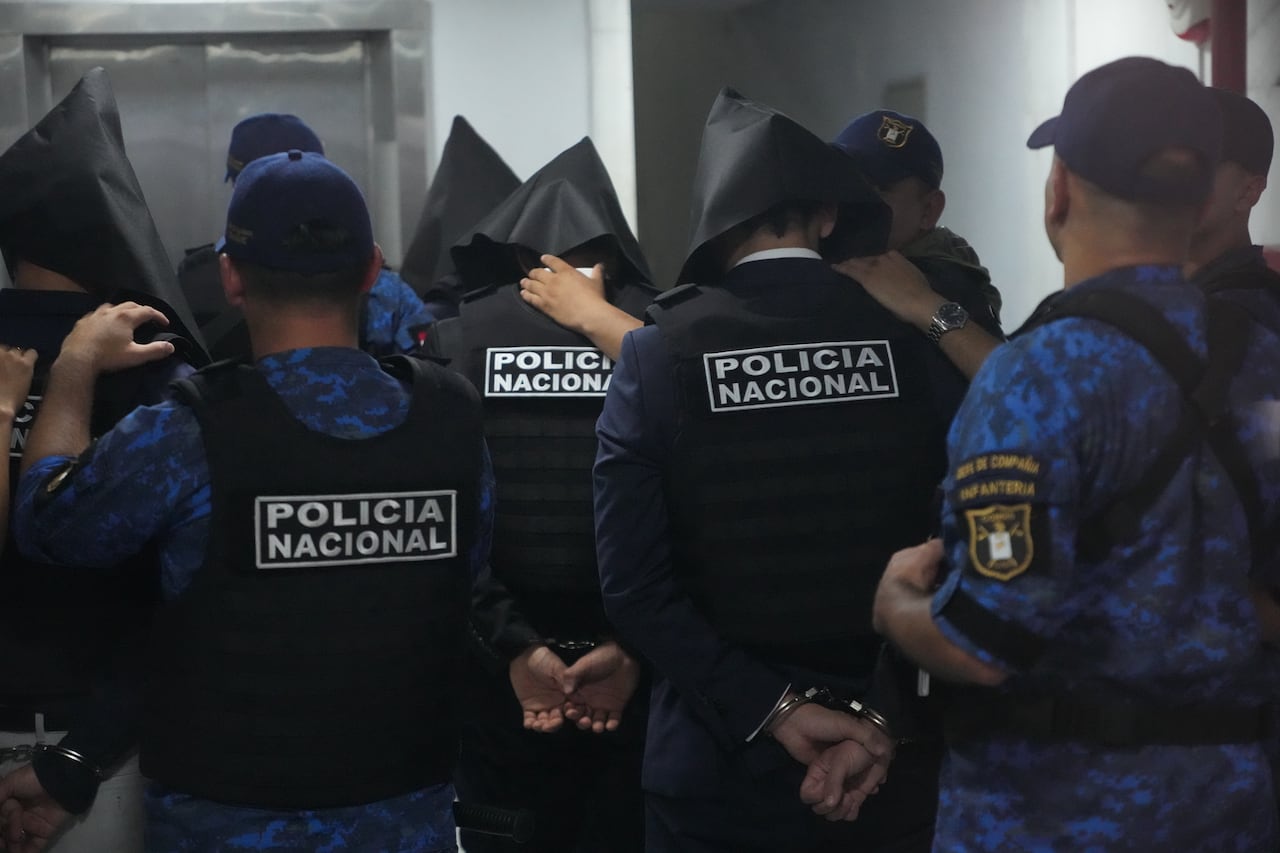
Ueno Bank executives arrive in custody at the anti-corruption prosecutor’s office in Asunción on Wednesday. (Jorge Saenz/The Associated Press)
Ueno had provided substantial loans to firms linked to its owners, exceeding legal limits and lacking adequate collateral to secure the debts in case of defaults.
By November, regulators investigating Ueno’s loans discovered poorly documented lending practices, according to the central bank, as well as expenses that the bank incorrectly classified as assets.
Once the financial records were adjusted, Ueno’s capital—essential for banks to absorb losses—dropped to below half of the required legal minimum.

A person stands outside a closed branch of Ueno Bank in Asunción on Thursday. (Cesar Olmedo/Reuters)
On Tuesday, the central bank announced the seizure of the lender, freezing nearly three million customers’ accounts, and initiated a process to transfer deposits and recoverable assets to other banks before liquidating what remained.
Ueno’s app, debit cards, and transfer services were suspended, with its branches closing their doors, leaving frustrated customers queued outside.
On Wednesday, a rush to open new accounts elsewhere caused crashes in the mobile applications of other banks, heightening public anxiety.

People line up outside a branch of the Banco Familiar bank in Asunción on Wednesday. (Daniel Duarte/AFP/Getty Images)
The central bank reported on Saturday that approximately $160 million USD had been disbursed to nearly 1.2 million savers under the state deposit guarantee program.
Peña, who was a stakeholder in Ueno’s holding company until March 2025, has refuted any allegations of misconduct, asserting that the bank’s issues are regulatory in nature.
The two charges against Peña could result in a maximum prison term of 10 years each, according to prosecutors.
Carvallo resigned as head of the central bank earlier this week amid the escalating Ueno crisis. He had previously led the digital lender until 2023.
Prosecutors have also charged 27 bank officials and associates with breach of trust and attempted fraud.
Public Outrage
Peña resigned on Thursday, but Congress rejected his resignation and proceeded with impeachment proceedings. Opposition lawmakers pushed for his removal to prevent him from retaining immunity after leaving office.
“He needs to go, but not to his home. He should be sent to a maximum-security prison,” stated opposition Senator Yolanda Paredes to the media. “The public has had enough of impunity.”
Following Peña’s ouster, Vice-President Pedro Alliana ascended to power and was sworn in on Friday to complete Peña’s term, which runs through August 2028.

Pedro Alliana addresses lawmakers after taking the oath of office as Paraguay’s new president on Friday following Peña’s impeachment. (Jorge Saenz/The Associated Press)
The collapse of Ueno has left millions of customers unable to access their funds, triggering protests in Asunción.
Thousands of demonstrators, demanding access to their frozen funds and accountability for Ueno’s failure, have confronted police who used rubber bullets and pepper spray this week.
Paraguay’s largest teachers’ union, representing over 40,000 members, is set to initiate an indefinite national strike on Monday to advocate for the protection of public pension funds.

Protesters gather outside Peña’s residence in Asunción on Friday. (Cesar Olmedo/Reuters)
On Saturday, several dozen protesters assembled outside the attorney general’s office seeking to voice their dissatisfaction with Peña, who was quickly escorted out of the building.
Some demonstrators expressed a desire for an investigation into Paraguay’s new president, a close ally of Peña.
“They are all accomplices,” declared Liliana Jara, a protester present at the scene. “They belong to the same clique.”
