
The Commissioner of the RCMP stated that there is no proof indicating that investigations have been affected after reports emerged suggesting that FBI Director Kash Patel temporarily ceased collaboration with the Mounties in response to an internal CBC memo.
A story from the New York Times published last week claimed that an upset Patel aimed to penalize the Canadian national police force following a leaked internal memo that directed CBC journalists not to label the September 11 attacks as terrorist events in advance of the 25th anniversary. The directive was revised due to widespread international backlash.
RCMP Commissioner Mike Duheme mentioned that he did not receive any official communication regarding the FBI’s intention to halt cooperation.
“My worry was the perception among the Canadian public regarding whether this was true or not,” he informed reporters after his appearance before a parliamentary committee on Thursday.
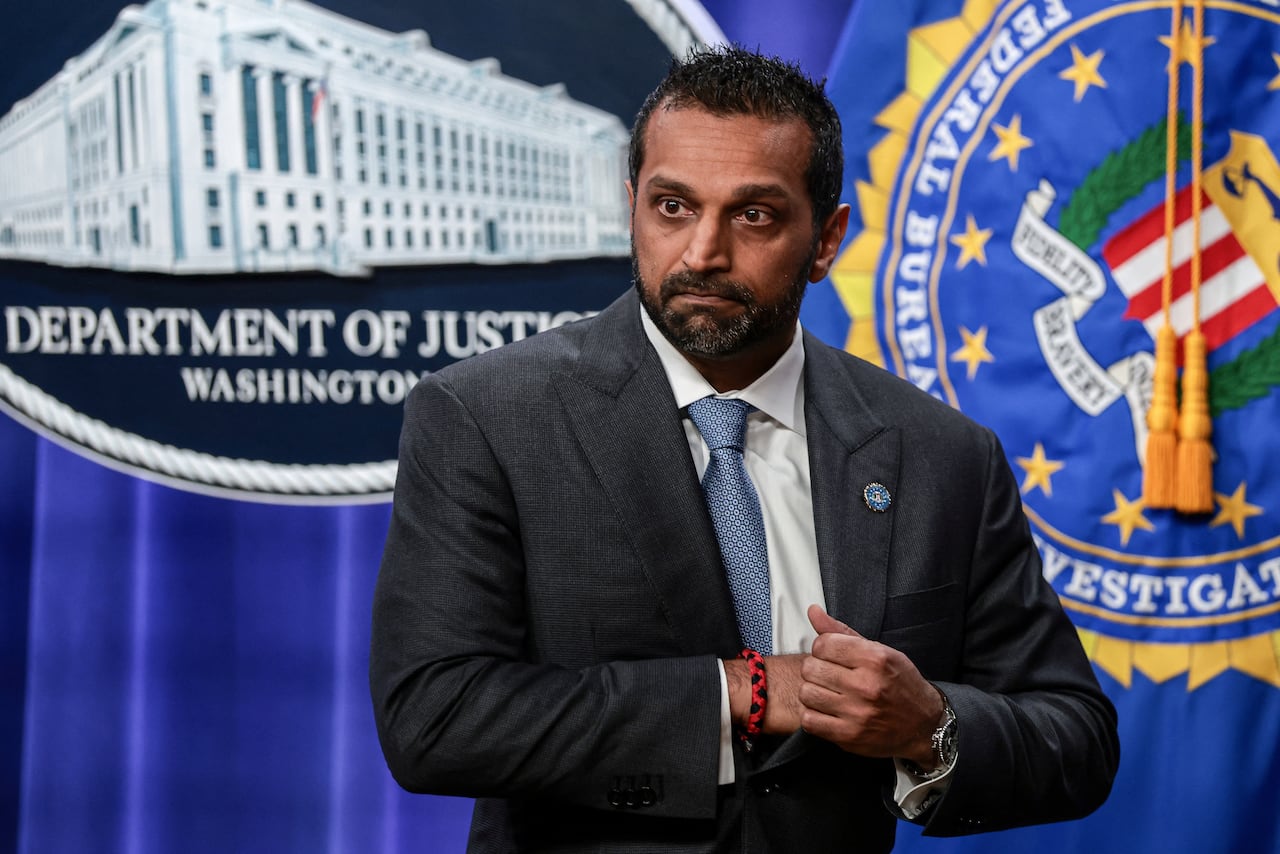
FBI Director Kash Patel warned that any Canadian agency failing to ‘publicly reject’ the CBC memo would ‘no longer have a friend in this FBI.’ (Evelyn Hockstein/Reuters)
“We conducted some research across the country, and nothing was reported indicating that any of our investigations have come to a halt.”
Following the CBC memo— which operates independently from both the RCMP and the broader government— Patel released a statement on X asserting that “any Canadian agency that does not publicly reject this distortion of history, which disrespects the memories of those lost in our largest terrorist attack, will no longer have a friend in this FBI.”
Sources cited by the New York Times indicated that Patel aimed to retaliate against Canada, leading FBI officials to cancel meetings with their Canadian counterparts, informing them they would be unreachable for a while.
Duheme also noted that he heard Patel “advised people to avoid the embassy on certain days, but there’s no way for me to substantiate that,” while emphasizing that the RCMP’s relationship with the FBI “remains very robust.”
U.S. intelligence-sharing to persist
A significant rift with the FBI could have serious repercussions for Canada, which predominantly relies on intelligence imports and heavily depends on alliances like the Five Eyes—comprising the United States, United Kingdom, Australia, and New Zealand—for information sharing.
The RCMP and FBI share a long-standing partnership, collaborating on various issues, including border security, terrorism, and cybersecurity.
Nonetheless, the intelligence and security collaboration between the two nations has come under scrutiny since U.S. President Donald Trump’s re-election, who has frequently provoked Canada with annexation threats and initiated a trade conflict with the country.
-
ShinyHunters hackers claim to have breached FBI, stolen employee data
-
RCMP affirms strong relationships with allies following NYT report
From the RCMP’s viewpoint, Duheme asserted that there are no plans to lessen cooperation.
“How would it look if you withhold information and an incident were to occur?” he questioned.
“We’re all cognizant of the political landscape in which we operate,” Duheme stated. However, he emphasized that both agencies share a unified goal: “Protecting Americans, safeguarding Canadians, and collaborating. That is what people expect from us.”
The FBI has refrained from commenting on the New York Times report.
In response to inquiries about the report, a representative from the Canadian Security Intelligence Service (CSIS) stated last week that it maintains “longstanding and mutually beneficial partnerships with various entities within the U.S. intelligence community.”
“Regarding security and intelligence, the FBI continues to be a vital ally, and it is in our common interest to maintain our collaboration.”
CBC has a longstanding practice of generally avoiding the classification of specific actions as terrorism without attribution.
In light of the backlash, Basem Boshra, CBC’s senior director of journalistic standards and public trust, issued a clarification on August 28 stating that “direct attribution is not necessary for characterizing the historic events of 9/11 as terrorism.”
When contacted for a statement, CBC spokesperson Chuck Thompson remarked, “it’s not our role to comment on issues between the FBI and the RCMP.”
