Cuba is set to commence its school year next week as scheduled, despite facing a significant crisis that has hampered transportation and electricity and resulted in a decrease in teacher numbers and shortages of essential items such as uniforms.
According to the island’s education minister, nearly 1.4 million children and teenagers will return to school at the beginning of September.
“Educators in Cuba recognize the profound effects of the collective suffocation we are enduring… thus, this school year’s greatest achievement will be our ability to proceed with it at all,” stated Education Minister Naima Trujillo.
In a significant escalation of its prolonged “maximum pressure” campaign, the United States declared that it has charged Raúl Castro, Cuba’s former president, regarding the downing of two planes operated by a group of Cuban exiles in 1996. This decision was anticipated by officials in the Trump administration after the CIA director’s meeting with Cuban representatives in Havana. Peter Kornbluh, an author and senior analyst at the National Security Archive with expertise in Cuba, discusses whether this indicates a potential Venezuela-like intervention in the country. For transcripts of Front Burner, please visit: https://www.cbc.ca/radio/frontburner/transcripts [https://www.cbc.ca/radio/frontburner/transcripts]
The crisis has intensified since June, when students were released early for summer vacation due to transportation and electricity issues exacerbated by tightened sanctions from the administration of U.S. President Donald Trump.
Following this, Washington has enforced additional sanctions on numerous Cuban officials, accusing them of engaging in anti-American actions, aiming to escalate pressure on the communist leadership in Cuba.
Havana claims that the U.S. is attempting to harm its economy and obstruct its ability to provide essential services.
Education system a point of pride
Cuba has long celebrated its free, state-funded education system as one of its most significant accomplishments. However, severe shortages, worsened by U.S. sanctions, have raised doubts about the sustainability of this model.
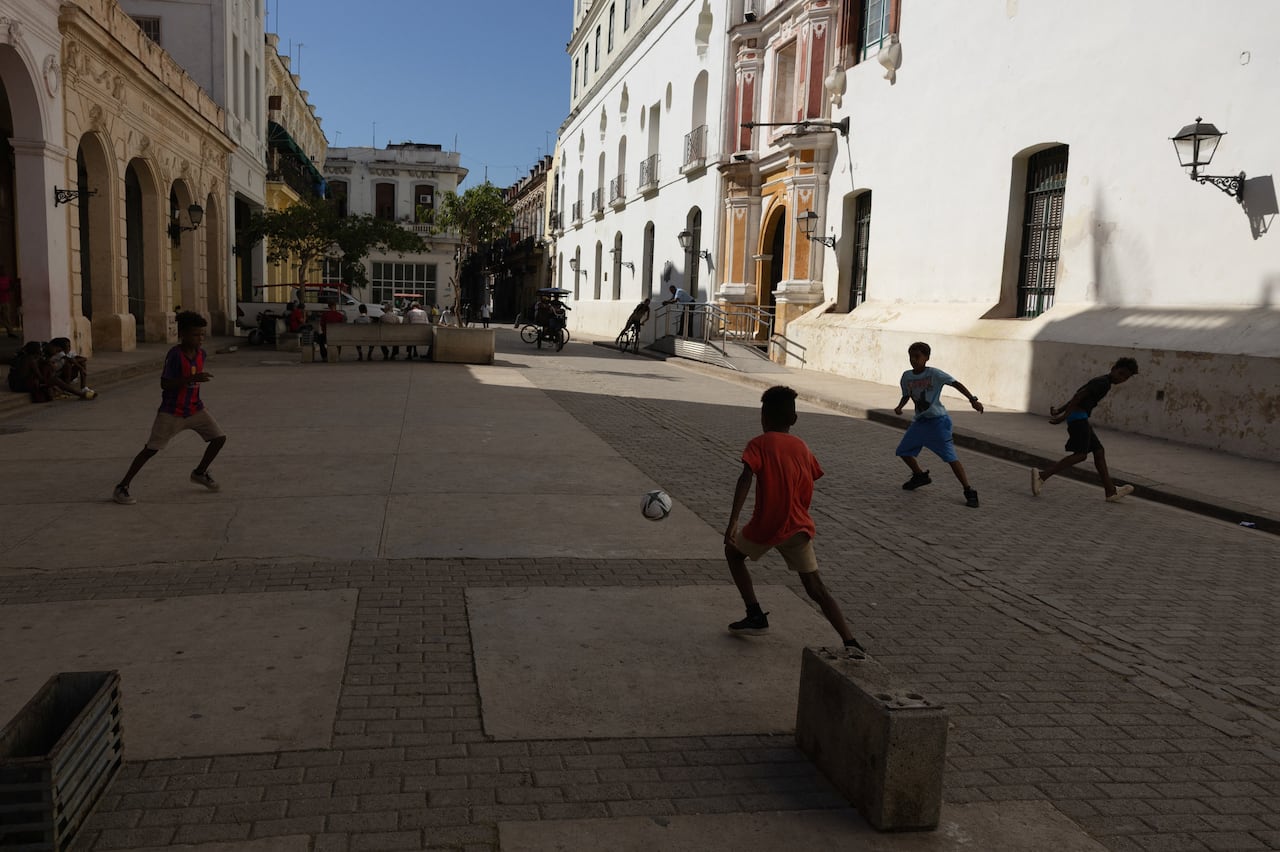
A group of boys are seen kicking a soccer ball around on a street in Havana on Thursday. (Norlys Perez/Reuters)
According to official data, teacher availability in the island’s schools has dropped to 73 percent, with many educators having left for better opportunities or emigrated.
Trujillo mentioned that the sector plans to recruit university students, professionals from different fields, and retired teachers, in addition to providing extra incentives, to maintain school operations.
The Havana province, which faces some of the most significant staffing challenges, is expected to receive around 3,000 teachers from eastern provinces where schools have better staffing levels.
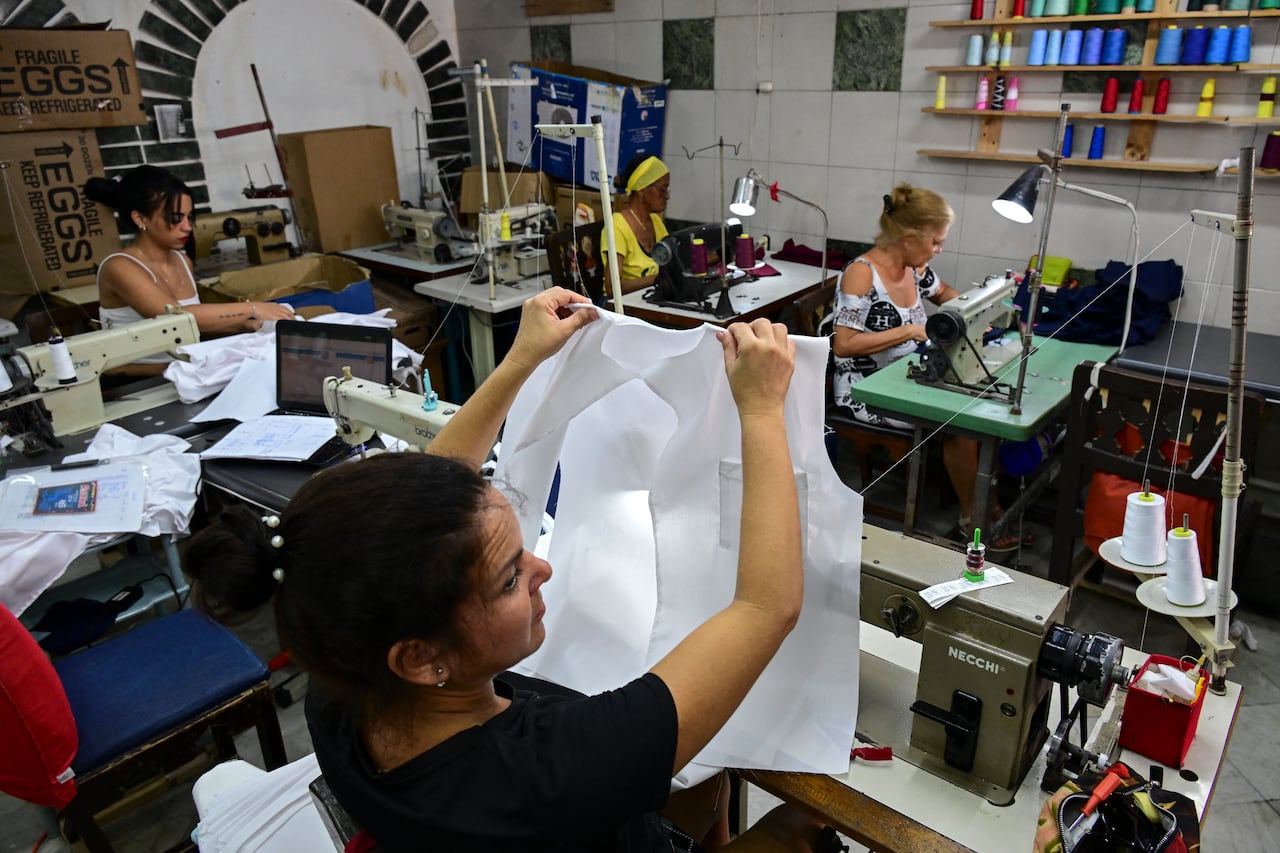
Women sew school uniforms while working at a private textile workshop in Havana on Thursday. (Yamil Lage/AFP/Getty Images)
Shortages have also impacted the distribution of school uniforms, with available official garments meeting only 12 percent of the demand for primary school students due to ongoing power outages at the factories producing these uniforms.
The minister encouraged schools to adopt a flexible approach and allow students to wear “comfortable clothes” along with their traditional red neckerchiefs.
