
The Carney administration intends to employ a parliamentary mechanism not utilized since the Harper era to give priority to the examination of its recent major projects legislation.
Shortly after the introduction of Bill C-39, the government initiated a referral to a “legislative committee”—a tool that has been leveraged for some of the most significant laws in Canada’s past, such as the Clarity Act of 2000 and the 2005 Civil Marriage Act, which legalized same-sex marriage nationwide.
This extensive 243-page omnibus bill aims to expedite development initiatives and prevent labour interruptions. Government House leader Steven MacKinnon referred to it as the “cornerstone” of the fall parliamentary session.
Criticism has been directed at the bill from organized labour, environmental organizations, and the Assembly of First Nations due to its proposed alterations to consultation processes, impact assessments, and the Labour Code. The bill encompasses numerous changes—24 distinct acts and regulations are either amended or cited.
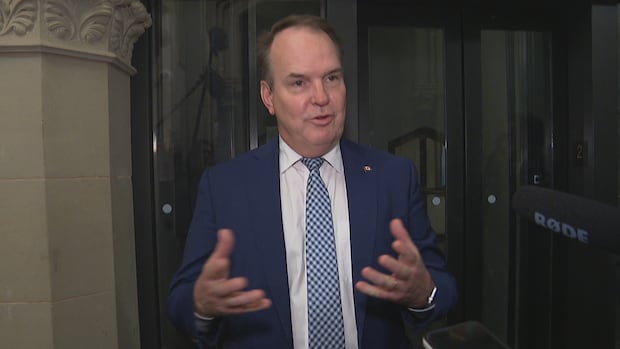
Government House leader Steven MacKinnon states that MPs will concentrate on a bill aimed at ‘protecting jobs’ and ‘fostering investment in our communities’ when Parliament reconvenes on Monday.
After a bill successfully passes its second reading in the House of Commons, it transitions to the committee phase—where MPs usually gather expert input, analyze the text, suggest amendments, and prepare a report. This responsibility typically falls to standing committees that persist across different Parliaments.
A legislative committee, on the other hand, is a specially appointed group of parliamentarians assigned to study a singular bill, enabling it to bypass other ongoing business managed by standing committees.
“I would say the reason for adopting this approach was to establish a committee that would focus solely on this entire bill,” MacKinnon remarked on Thursday.
He explained that because C-39 spans “various domains and departments,” it was appropriate to form “a dedicated committee for the entire bill.”
He indicated that there was “no other intention” behind this unusual choice, and that he is not considering dividing C-39 into separate bills.
As per the House of Commons Procedure and Practice, the guidebook detailing the conduct of House activities, legislative committees are established as needed to scrutinize specific bills, including calling witnesses and suggesting amendments.
However, unlike standing committees, legislative committees typically do not take on additional business, generate comprehensive reports on the legislation they are reviewing, or offer recommendations, dissenting opinions, or supplementary views to any reports.
Last utilized for government bill in 2012
The most recent instance of a legislative committee being formed to examine a government bill occurred in 2012, during Stephen Harper’s Conservative majority rule. At that time, Industry Minister Christian Paradis reintroduced the Copyright Modernization Act, Bill C-11, which was assigned to a legislative committee and subsequently received royal assent a few months later.
The Harper administration also established a legislative committee in 2011 for Bill C-18, which eliminated the Canadian Wheat Board’s single-desk monopoly.
Introduced in October and moving through committee in November, Bill C-18 rapidly became law by year-end, despite promises from opposition Liberal MPs to stall the process.
Harper’s Conservatives utilized the same approach for one of their initial pieces of legislation after assuming power in 2006: the Federal Accountability Act, a comprehensive initiative aimed at prohibiting corporate and union contributions to campaigns and limiting individual donations, among other conflict of interest regulations. They repeated this in 2007 for C-2, a stringent crime bill that advanced from introduction to royal assent in a mere four months.
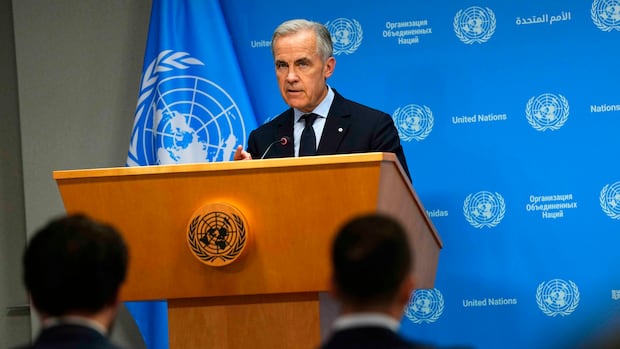
Prime Minister Mark Carney asserts that Bill C-39, the Building Canada Strong Act, will enhance the obligation of employers to ‘negotiate in good faith’ and ensure transparency in labor negotiations.
During Harper’s decade in office, legislative committees were convened on 11 occasions to advance government bills. The last instance a Liberal government created such a committee was in 2005 for the Civil Marriage Act, which legalized same-sex marriage nationwide. A legislative committee was also formed to facilitate the passage of Jean Chrétien’s Clarity Act of 2000, which established a framework for any future provincial referendum on secession.
Conservative MPs have not disclosed their voting intentions regarding Bill C-39.
“We will take the necessary time to examine the legislation thoroughly and identify elements within it that we can enhance. Once it reaches that legislative committee, we will propose the required amendments to ensure actual progress rather than just promises,” stated Conservative Deputy Leader Melissa Lantsman.
It remains uncertain which MPs will serve on the committee. However, with a majority government, the Liberals possess sufficient votes to pass the bill in the House without needing support from other parties.
