
On Thursday, the Kremlin rejected U.S. media allegations suggesting that Russia might launch an attack on a NATO member country and stated that the recent visit of CIA Director John Ratcliffe to Moscow was intended to caution against such actions.
In response to these reports, Kremlin spokesperson Dmitry Peskov commented, “Currently, a large amount of this type of sensational material is being disseminated. Naturally, it is far from the truth and does not reflect the aims of the Russian Federation.”
Peskov mentioned the day before that Ratcliffe did not have a meeting with Vladimir Putin, although Putin was aware of Ratcliffe’s visit.
The Wall Street Journal initially reported late on Wednesday that Ratcliffe had conveyed a warning to Russia against testing NATO’s unity by contemplating an attack on a member state. The publication referenced two sources familiar with the details of the visit.
-
Kremlin confirms CIA director’s meeting with Russian counterparts in Moscow
-
Ground zero: NATO’s drone war comes down to earth in Latvia
Earlier on Thursday, Sergey Naryshkin, the head of Russia’s SVR foreign intelligence agency, stated that he had a “working-level meeting” with Ratcliffe, during which they addressed unspecified sensitive topics relevant to their respective intelligence operations.
Naryshkin remarked that their meeting was nothing out of the ordinary.
Last known CIA visit was pre-invasion
U.S. President Donald Trump characterized Ratcliffe’s visit as “semi-routine,” occurring amidst the ongoing conflict in Ukraine and stalled efforts for a lasting peace between the U.S. and Iran.
However, the most recent visit by a CIA director was conducted by Ratcliffe’s predecessor, William Burns, who met with Putin in November 2021, three months prior to Russia’s invasion of Ukraine.
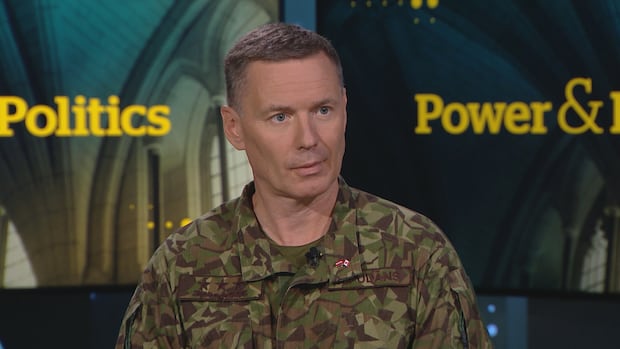
Prime Minister Mark Carney announced the extension of Operation Reassurance in Latvia on the margins of the NATO summit in Turkey last month. With Russia’s war in Ukraine raging into its fifth year, what is the future of Canada’s presence in Latvia beyond 2031? Power & Politics asks Latvia’s Chief of Defence Maj.-Gen. Kaspars Pudāns.
NATO has not officially commented on Ratcliffe’s visit or the related reports, but a spokesperson for the European Union indicated on Thursday that the bloc was not informed about Ratcliffe’s trip in advance.
Earlier this month, Reuters reported that northern NATO nations, including Lithuania, Latvia, Estonia, and Poland, are enhancing security measures around critical infrastructure such as dams, power plants, and gas facilities due to increasing worries that Moscow might orchestrate a “false flag” operation using Ukrainian drones.
-
Could an explosive drone at a German airport signal a growing Russian threat to NATO?
-
U.K. to provide long-range missile blueprints to Ukraine
This report was informed by discussions with the Latvian prime minister, the defence minister of Lithuania, and four intelligence and corporate officials from the region who provided updated intelligence assessments.
Peskov employed a similar phrase, “scare stories,” to refute those allegations. Moscow asserts that the West, driven by “Russophobia,” consistently accuses it of malicious actions without substantiating evidence.

NATO is on the lookout for airspace threats over eastern Europe as suspicious drone sightings continue to shut down airports. For The National, CBC’s Briar Stewart gets a closer look at the Operation Eastern Sentry mission and what it’s watching for in the skies
In the past two years, unexplained drones have been spotted throughout Europe, raising concerns.
Earlier this month, German authorities discovered a drone equipped with explosives at Leipzig/Halle Airport, which functions as both a civilian airport and a NATO logistical center. German Interior Minister Alexander Dobrindt labeled it a hybrid attack but refrained from assigning blame. Russian officials dismissed claims from German politicians and media suggesting their involvement.
